 Reviews



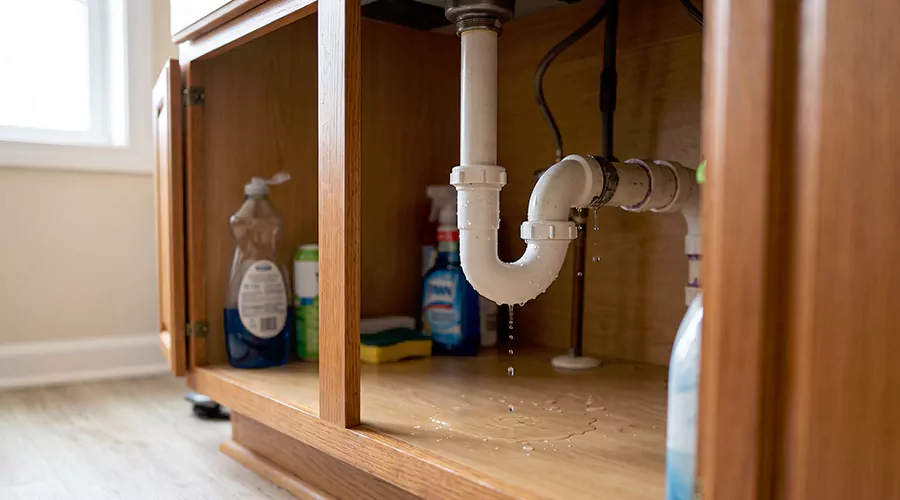
A pipe usually leaks because its material or a connection has deteriorated. Corrosion and damaged joints are common causes. Excessive pressure or freezing conditions can also contribute to pipe failure. In the United States, copper pipe leak repair cost an average of $500 in 2026, with reported costs ranging from $150 to $4,700. The wide cost range reflects major differences between exposed piping and pipes hidden inside walls or underground.
The first task is determining whether the water comes from a pressurized supply pipe or a drainage pipe. That distinction helps identify the source and the appropriate next step.
What Are the Most Common Causes of a Leaking Pipe?
Pipes can develop leaks because of internal deterioration or damage to their connections. The cause depends on the pipe material and the conditions surrounding the installation.
Some failures develop gradually. Others occur suddenly after freezing weather or accidental physical damage.
Common causes include:
- Corrosion: Metal pipes deteriorate and develop weak points.
- Damaged joints: Connections no longer form a watertight seal.
- Excessive pressure: Water pressure places additional stress on plumbing components.
- Freezing: Ice expands inside water-filled pipes and can cause splitting.
- Physical damage: Drilling or accidental impact damages hidden or exposed plumbing.
- Poor installation: Incorrectly assembled connections may develop leaks.
- Material deterioration: Older pipe materials lose strength over time.
- Pipe movement: Structural movement places stress on rigid connections.
- Blocked drainage: A restriction can expose weak waste-pipe joints to standing water.
The EPA identifies corrosion and freezing among the factors that contribute to household plumbing leaks.
Can the Pipe Material Affect the Cause?
Different pipe materials have different characteristics. A copper pipe can develop localized corrosion. Plastic piping can leak because of damaged joints or other material-related failures.
The pipe's material alone cannot establish the reason for a leak. However, identifying it can help narrow the inspection.
| Pipe Material | Possible Failure | Important Consideration |
|---|---|---|
| Copper | Corrosion or connection failure | Inspect for localized deterioration |
| Galvanized steel | Internal corrosion | Age and condition matter |
| PEX | Damaged connection or physical damage | Inspect fittings and exposed sections |
| PVC | Cracked pipe or failed joint | Check drainage connections |
| CPVC | Material damage or connection failure | Follow material-specific repair guidance |
| Cast iron | Corrosion or joint deterioration | Inspect older drainage piping |
Angi notes that pipe material and age affect the difficulty and cost of leak repair. A repair method suitable for one material may be inappropriate for another.
How Does a Small Pipe Leak Get Worse?
A minor leak can remain hidden for an extended period when the pipe is installed behind a wall or beneath flooring. Even slow dripping can damage surrounding materials when moisture accumulates repeatedly.
A pressurized leak can become more serious if the damaged area continues deteriorating.
| Leak Stage | Typical Symptoms | Possible Consequence | 2026 U.S. Cost |
|---|---|---|---|
| Early | Small visible drip | Local moisture | May involve a simple repair |
| Developing | Repeated dampness | Cabinet or wall damage | Depends on access |
| Active | Continuous water loss | Increasing water damage | 150–4,700 repair range |
| Hidden | Moisture behind finishes | Additional restoration work | Repair plus restoration |
| Major failure | Rapid water release | Possible flooding | Emergency costs may apply |
Angi's July 2026 report places the average pipe leak repair at approximately $500. Difficult repairs involving hidden or underground piping can cost substantially more. These estimates describe pipe repair and do not automatically include restoration of every damaged building material.
What Warning Signs Indicate a Leaking Pipe?
Some pipe leaks are immediately visible. Others produce indirect symptoms because the damaged section is concealed.
Watch for these warning signs:
- Water drips from an exposed pipe.
- Moisture forms around a plumbing joint.
- A wall develops unexplained staining.
- Paint begins bubbling near concealed plumbing.
- A cabinet remains damp.
- A musty smell develops in an enclosed area.
- The water bill increases without an obvious reason.
- The water meter records unexpected consumption.
- Unexplained wet areas develop around the property.
- Water pressure changes alongside other leak symptoms.
A damp wall does not automatically mean that the pipe inside it is leaking. Roof leaks and condensation can produce similar evidence. The location and timing of the moisture deserve careful investigation.
How Can You Tell Whether the Supply or Drain Pipe Is Leaking?
Pressurized supply pipes carry water toward fixtures. Drainage pipes carry wastewater away. This difference affects when leakage occurs. A supply pipe can leak while every fixture is switched off because the pipe remains pressurized. A drainage pipe generally leaks while wastewater passes through the damaged section. For example, a sink's P-trap may remain dry throughout the day and begin dripping only when the basin is emptied. An under-sink supply connection may drip continuously without any fixture use. Observing when water appears is therefore one of the simplest ways to narrow the source.
Can High Water Pressure Make Pipes Leak?
Excessive pressure can increase stress on plumbing connections. It may also expose existing weaknesses in pipes or fittings. However, a leak does not automatically establish that water pressure is too high. Pressure must be measured appropriately. Other factors such as material deterioration or installation problems may be responsible. Possible clues include repeated connection failures and other pressure-related plumbing symptoms. If high pressure is confirmed, the correct solution depends on the building's plumbing arrangement. Replacing a damaged fitting without addressing an underlying pressure problem may allow similar failures to occur elsewhere.
Can Freezing Cause a Pipe to Leak?
Water expands when it freezes. If ice forms inside a water-filled pipe, pressure can develop in the affected section. The pipe may eventually split or a connection may fail. The resulting leak can become visible only when temperatures rise and water flow returns.
Pipes installed in exposed areas are particularly vulnerable during severe cold.
Examples include:
- Unheated garages.
- Exterior walls.
- Crawl spaces.
- Exposed outdoor plumbing.
- Poorly insulated service areas.
A pipe that begins leaking after freezing weather should be inspected for damage before normal water use resumes. Do not use an open flame or excessive heat to thaw frozen plumbing.
Could the Moisture Be Condensation?
Condensation can make a cold pipe appear to be leaking. When warm, humid air contacts the pipe's cold exterior, moisture may form across its surface. This is different from a leak that repeatedly begins at one fitting or crack. A basic observation can help distinguish the two conditions. Dry the visible pipe carefully and watch how moisture returns. Condensation often produces fine droplets across a broader surface. A leak tends to produce concentrated moisture at a particular point. However, the distinction is not always obvious. An inaccessible or persistent source requires further investigation.
How Can You Find a Hidden Pipe Leak?
A water-meter test can help identify unexplained water consumption when no fixtures or appliances are using water. This test is particularly useful for suspected leaks in pressurized plumbing. It does not reliably detect every drainage leak because wastewater can escape without affecting consumption while the water supply is inactive. The EPA recommends comparing meter readings during a two-hour period when no water is being used.
How to Perform the Water Meter Test?
- Turn off all faucets.
- Confirm that toilets have finished filling.
- Stop appliances that use water.
- Disable automatic irrigation during the test.
- Record the water-meter reading.
- Avoid using water for approximately two hours.
- Record the meter reading again.
- Compare both measurements.
A changed reading indicates that water passed through the meter during the test. This may suggest a leak, although another source of water use must first be ruled out. A meter test cannot identify the exact location of the problem.
How Can You Check an Exposed Pipe?
An exposed pipe provides an opportunity to identify where moisture first appears. However, inspection should not involve opening pressurized connections or handling unknown substances.
For an ordinary accessible water pipe:
- Clear the surrounding area.
- Identify the pipe's general purpose.
- Dry the exterior when safe.
- Place absorbent material beneath the suspected connection.
- Observe whether moisture returns.
- Check nearby fittings.
- Record where the first drop appears.
- Stop if the leak becomes more severe.
If water is approaching electrical equipment, avoid the affected area and isolate the supply only when it is safe. Do not attempt to tighten a severely corroded or visibly damaged connection.
What Should You Do Immediately When a Pipe Is Leaking?
A continuous water leak should be isolated promptly to reduce the amount of water entering the surrounding area. The appropriate valve depends on the location of the damaged pipe.
For a typical pressurized household water leak:
- Stop using nearby fixtures.
- Locate the relevant shutoff valve.
- Close the valve if it operates safely.
- Use the main water shutoff when appropriate.
- Keep people away from wet electrical equipment.
- Remove nearby belongings only when the area is safe.
- Document the visible damage.
Do not attempt to operate an electrical panel while standing in water. When the leak is hidden or the damaged area cannot be isolated safely, stop further investigation.
How Much Does Pipe Leak Repair Cost in 2026?
Repair costs depend on the type of pipe and its accessibility. An exposed connection is generally easier to access than a pipe concealed behind finished building materials.
The following figures reflect Angi's July 2026 U.S. cost report.
| Repair Category | Estimated Cost |
|---|---|
| General pipe leak repair | 150–4,700 |
| Average pipe leak repair | Approximately $500 |
| Basic water-line leak repair | Starting around $190 |
| Main water-line repair | 340–1,500 |
| Extensive sewer-line repair | 1,250–4,700 |
| Diagnostic visit | Approximately 80–100 |
These figures describe different types of repairs. Restoration expenses may be additional when water has damaged surrounding materials.
When Should You Call a Professional?
Professional repair becomes appropriate when the leak involves damaged pressurized piping or its location cannot be identified safely.
Seek assistance when:
- A pipe has split or burst.
- Water is escaping behind a wall.
- The main supply line may be damaged.
- Several connections show significant corrosion.
- A temporary repair does not stop the leak.
- Water has reached electrical equipment.
- The leak continues after the appropriate supply has been isolated.
- The exact source remains inaccessible.
A professional can identify the damaged section and select a repair compatible with the installed pipe material.
How Can You Prevent Future Pipe Leaks?
Preventive maintenance focuses on detecting early deterioration and reducing exposure to conditions that can damage plumbing.
A practical routine includes:
- Inspect accessible pipe connections periodically.
- Check beneath sinks for moisture.
- Protect vulnerable pipes before freezing weather.
- Address confirmed water-pressure problems.
- Avoid storing heavy objects against exposed plumbing.
- Monitor unexplained increases in water consumption.
- Investigate recurring moisture promptly.
The EPA also recommends checking water bills and using leak-detection systems when appropriate.
Conclusion
A leaking pipe may have a damaged connection or deteriorated material. Freezing and excessive pressure can also contribute to failure. Identify whether the leak involves pressurized supply plumbing or drainage piping before choosing a repair. A water-meter test can help investigate hidden supply leaks, but it will not locate every problem. Isolate active leaks when safe and arrange appropriate repairs before moisture damages surrounding materials.
Frequently Asked Questions
Why does my pipe leak only when I use the sink?
The damaged section may be part of the drainage system rather than the pressurized water supply.
Can condensation look like a pipe leak?
Yes. A cold pipe can develop moisture across its exterior when surrounding air is humid.
How much does pipe leak repair cost?
The 2026 U.S. average is approximately $500, although reported costs range from $150 to $4,700.
Can a hidden pipe leak increase my water bill?
Yes. A pressurized supply leak can waste water continuously and increase consumption.
Should I use tape to repair a leaking pipe?
A temporary product cannot reliably replace a proper repair to damaged pressurized plumbing. The correct solution depends on the pipe material and cause of failure.